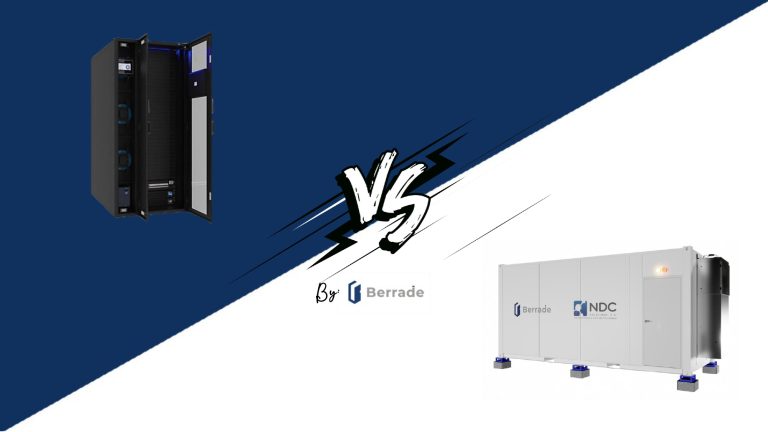
As the demand for efficient, scalable, and adaptable IT infrastructure intensifies, containerized data center solutions have become essential in modern data management. Micro data center (MDC) containers and modular data center containers meet different operational needs, each with its unique features and utilities. This article comprehensively analyzes these two solutions, focusing on their differences and specific applications in the telecommunications and IT sectors.
Micro data center (MDC) containers are compact, integrated systems designed to house critical IT infrastructure, including servers, storage, and network components. They are optimized for edge computing, allowing localized data processing and rapid deployment. Thanks to their efficient design, MDCs are ideal for environments where space is limited and latency must be minimal, such as in IoT applications and real-time services.
On the other hand, modular data center containers are larger systems composed of multiple interconnected modules, each capable of housing various data center components. These modular designs offer greater flexibility and scalability, adapting to various organizational needs. Their ability to expand according to demand enables businesses to implement infrastructure solutions that can grow alongside their operational requirements, without the need for massive initial investments in infrastructure.
Key Differences Data Center Container Micro and Data Center Container Modular
- Size and Footprint
- Micro Data Centers: Typically fit within standard shipping containers, with a footprint of 10 to 20 square meters. Their compact size makes them ideal for deployment in constrained environments, such as urban areas or remote locations.
- Modular Data Centers: Generally occupy larger spaces, allowing for multiple configurations that can scale up to several hundred square meters. They support extensive IT loads and can be customized to include various functionalities.
- Scalability
- Micro Data Centers: While capable of quick deployment, MDCs are less scalable, designed for specific workloads rather than rapid expansion. They are best suited for stable environments with predictable processing needs.
- Modular Data Centers: Highly scalable, modular systems enable organizations to incrementally add modules as demand increases. This feature is crucial for businesses experiencing fluctuating workloads or rapid growth.
- Cooling and Power Solutions
- Micro Data Centers: Often utilize basic cooling methods, such as air cooling, which suffices for lower-density applications. This design is efficient for localized processing but may not support higher thermal loads.
- Modular Data Centers: Equipped with advanced cooling systems, such as liquid cooling and chilled water solutions, modular containers can handle high-density workloads. They also incorporate sophisticated power management systems to ensure optimal energy efficiency.
- Deployment Speed
- Micro Data Centers: Known for their rapid setup capabilities, MDCs can be operational within hours or days. This speed is vital for organizations needing immediate solutions.
- Modular Data Centers: Although still quicker to deploy than traditional data centers, the setup process may take longer due to the complexity of integrating multiple modules.
Utilities of Data Center Container Micro and Data Center Container Modular
- Micro Data Centers
- Edge Computing: MDCs are particularly effective for edge computing applications, where low latency and localized data processing are essential. They can be deployed near data sources, such as IoT devices, enabling faster response times.
- Remote Deployments: Ideal for challenging environments, including military operations and temporary installations for disaster recovery, MDCs provide reliable infrastructure without the need for extensive site preparation.
- Modular Data Centers
- Large-Scale Operations: Modular systems are suited for enterprises that require substantial computing resources. Industries such as finance, healthcare, and telecommunications benefit from their ability to adapt to increasing data loads.
- Flexible Expansion: As businesses grow, modular data centers can be easily expanded. This flexibility reduces capital expenditures and minimizes operational disruption during upgrades.
Understanding the differences between micro and modular data center containers is essential for professionals in the telecommunications and IT sectors. Micro data centers offer compact, efficient solutions ideal for localized and edge computing applications, while modular data centers provide the scalability and flexibility necessary for large enterprises facing dynamic demands.
By assessing their specific operational needs, organizations can make informed decisions when selecting between these two innovative solutions. As data requirements continue to evolve, embracing containerized architectures will empower businesses to stay agile, efficient, and competitive in an increasingly complex digital landscape.