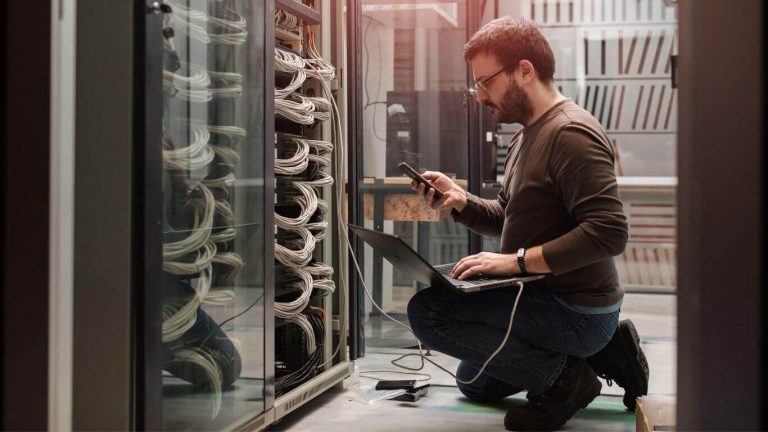
Before diving into the use and benefits of server racks, let’s start with the most basic question:
What Is a Server Rack?
A server rack, also known as a rack cabinet or enclosure, is a fundamental component in IT infrastructure. Specifically designed to house and organize electronic equipment such as servers, switches, routers, and uninterruptible power supply systems (UPS), these racks play a critical role in data centers and server rooms.
Beyond providing a secure and organized environment, racks optimize space, streamline equipment management and maintenance, and ensure efficient cooling, enhancing overall system performance.
Uses and advantages of server rack cabinets
At Berrade, we recognize that IT infrastructure forms the backbone of any modern digital operation. Selecting and implementing the right server racks is not just about optimizing equipment performance—it’s also a critical factor in the overall success of a data center. Here’s a closer look at their uses and advantages.
What are Server Rack Cabinets used for in a data center?
Server racks go far beyond being simple hardware enclosures. Their multifunctional design offers substantial benefits in various areas:
- Organization and density.
Server racks enable an orderly and efficient arrangement of equipment, maximizing component density per square foot. A single rack can accommodate everything from servers to networking devices and power distribution units (PDUs), optimizing available space. - Security.
Racks protect equipment from external threats, including unauthorized access, dust, moisture, and physical damage. This ensures hardware integrity while bolstering the confidentiality of stored and processed data. - Efficient Cooling.
Maintaining optimal temperatures is critical for avoiding failures caused by overheating. Server racks are engineered to promote airflow and integrate advanced cooling solutions, such as fans or cold/hot aisle containment systems. - Cable Management.
Integrated cable management systems prevent clutter and tangling. This improves maintenance efficiency, enhances airflow, and minimizes the risk of errors. - Scalability.
Thanks to their modular design, server racks make it easy to add or rearrange equipment, keeping pace with the evolving needs of a data center.
Benefits of having a rack cabinet in a Data Centre (DC)
Implementing server racks brings numerous advantages that directly impact the efficiency and profitability of a data center:
- Space optimization.
Racks help maximize the utilization of limited areas, enabling more equipment to be housed in a smaller footprint—especially valuable where space is at a premium. - Improved equipment performance.
Proper cable management and efficient cooling systems reduce failure rates, enhancing reliability and overall performance. - Lower operational costs.
By minimizing failures and optimizing energy consumption, racks help reduce long-term operational expenses. - Enhanced service availability.
Physical protection and thermal management ensure uninterrupted operation, minimizing downtime and maintaining service availability.
Key components of a server rack cabinet
A functional server rack must include essential components to guarantee performance and efficiency:
- Main frame.
Constructed from steel or aluminum, it provides the structural stability and load-bearing capacity needed for heavy equipment. - Panels and doors.
Side panels and perforated doors protect equipment from dust, moisture, and unauthorized access while allowing for better airflow. - Mounting rails.
Standardized rails use rack units (U) for consistent compatibility with a wide range of equipment. - Cooling systems.
These can range from fans and extractors to liquid cooling systems, depending on the thermal requirements of the installed devices. - Cable management.
Features like trays, organizers, and guides ensure neat and efficient cabling, improving accessibility and reducing risk during maintenance.

You may be wondering, how to choose a rack-type server cabinet?
From our experience, to choose the right rack, it’s important to consider these 6 factors:
- Equipment dimensions and weight. Ensure the internal dimensions and load capacity match the devices you intend to install.
- Rack height. Measured in rack units (U), this determines how much equipment can be accommodated.
- Cooling requirements. Evaluate whether your devices require additional ventilation or specialized cooling solutions.
- Available space. Account for the physical constraints of the installation area.
- Budget. Balance your requirements with available options to achieve cost-effectiveness.
- Regulatory compliance. Verify that the rack adheres to relevant safety and quality standards.
How much does a server rack cost?
As you can imagine, the price of a rack varies depending on factors such as:
- Size. Taller and deeper racks with greater capacity typically cost more.
- Materials.
- High-quality materials, such as durable steel, add to the cost but ensure longer service life.
- Additional features. Advanced cooling systems, electronic locking doors, and integrated cable management increase overall costs.
➡ Contact us without obligation to assess your project.
Types of rack cabinets offered by Berrade
At Berrade, we provide a comprehensive range of server racks designed to meet diverse client needs. From standard racks to custom solutions for high-density data centers, our offerings are tailored to maximize operational efficiency and ensure hardware security.
In this other article, you can see the different types of racks available to you.
Why choose Berrade?
If you’re looking for a company that matches the scale of your project, you should know that at Berrade, we are committed to providing high-performance rack solutions that ensure security, efficiency, and reliability in your data center. And furthermore, we:
- Design each project to measure.
- Use high-quality materials to ensure durability.
- Provide comprehensive solutions that include thermal management systems and wiring.
You can also ➡ contact us for personalized advice.