Operational visibility across distributed environments
Managing remote sites across multiple locations creates operational challenges that local supervision alone cannot resolve. Maintaining availability, detecting faults, ensuring service continuity and controlling costs all require centralising operational information and acting on infrastructure without permanent physical presence.
In telecommunications environments, where operational continuity depends on the condition of geographically dispersed installations, centralising infrastructure management improves supervision, reduces response times and maintains continuous visibility across the network.
Remote infrastructure centralisation consists of integrating the supervision and management of multiple sites within a single operational platform.
The objective goes beyond consolidating information. Operating distributed networks requires continuous access to asset status, rapid incident detection and the ability to act on infrastructure without depending on local intervention for every event.
In remote environments, managing each site in isolation increases operational complexity, makes fault detection harder and reduces response capability. Centralised platforms provide a coordinated view of the infrastructure and allow information from different systems and locations to be correlated.
Remote management platforms
Remote management platforms are vendor- and technology-agnostic, allowing assets of different types to be integrated within a single control environment.
Their capabilities include:
- Energy monitoring and supervision of electrical systems and cooling.
- Remote management of generators and battery systems.
- Access control and physical security.
- Real-time alarm and event management.
- Network-wide visibility with the ability to compare operational behaviour across sites.
In telecommunications infrastructure, this level of integration is particularly relevant for maintaining operational continuity in unattended or hard-to-access environments.
Infrastructure monitoring and incident detection
Continuous monitoring enables deviations to be identified before they affect operations.
Supervisory platforms collect data from sensors, electrical systems, cooling equipment, security cameras and power assets. Changes in operational parameters may indicate:
- Loss of energy efficiency
- Electrical system faults
- Cooling issues
- Unauthorised access or physical intrusion
- Progressive degradation of critical assets
Real-time alerts support faster response and help reduce operational impact before deviations begin affecting service continuity.
Remote management of power assets and critical systems
Remote management reduces intervention times and supports operational maintenance without the need for continuous site visits.
Current platforms enable supervision and management of:
- Generators. Monitoring of voltage, runtime, fuel consumption, efficiency and emissions. This helps identify incorrect operation or excessive use before faults affect infrastructure availability.
- Battery systems. Monitoring of state of health, charge status, voltage and operational duration. This supports maintenance planning and reduces downtime associated with failures in backup power systems.
- Network Operations Centre (NOC). Real-time visibility of active events across sites, prioritised by severity. This allows operators to identify faults, allocate resources and respond rapidly through integration with ticketing systems.
- Physical security. Multi-layer security systems with real-time alerts and CCTV monitoring. If forced or unauthorised access is detected by the sensor network, immediate alerts are triggered to support rapid response.
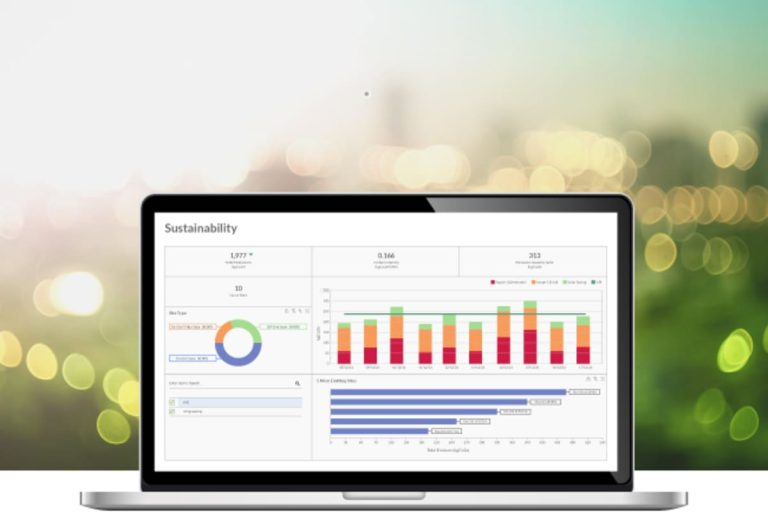
- Colocation management. A platform consolidating energy consumption data from multiple tenants, with management and billing capabilities built in.
Energy efficiency in telecommunications
Energy efficiency is an operational variable in telecommunications infrastructure.
Centralising energy data across multiple sites enables identification of inefficiencies, detection of abnormal consumption patterns and corrective action before deviations result in operational losses.
This capability improves operational decision-making and helps maintain control across distributed sites without increasing management complexity. Its most direct operational effects include reducing costs associated with site visits and corrective maintenance, tighter control over fuel consumption and power system performance, and improved energy efficiency across the network.
Operational outlook
Remote infrastructure centralisation enables distributed networks to operate with greater visibility, supervisory capability and operational control.
The combination of remote management platforms, energy monitoring and operational analysis improves incident detection, coordination and service continuity across critical infrastructure.
In environments where availability and energy performance directly condition operations, centralisation is not an additional layer. It is part of the infrastructure’s operational model.
Looking to centralise the management of your remote sites and improve operational control across your network?
At BERRADE, we integrate remote monitoring and management platforms adapted to telecommunications infrastructure, with solutions focused on improving operational visibility, efficiency and service continuity.