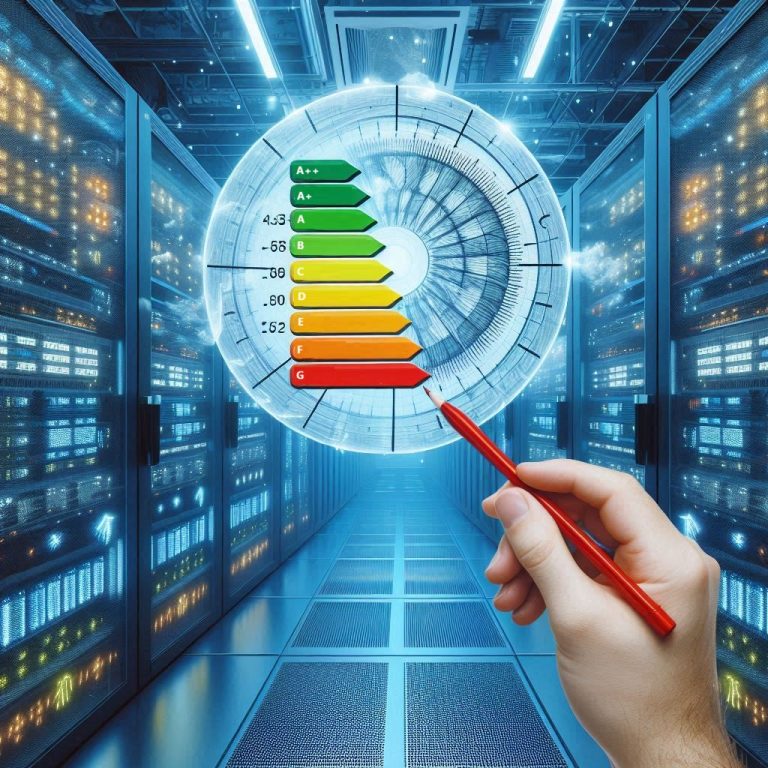
Energy efficiency in data centres has become a strategic priority for operators, technical leads and procurement departments. Accurately calculating this metric enables the identification of inefficiencies, reduction of energy consumption, and achievement of optimal performance.
In this article, we explain how to measure energy efficiency in data centres, which variables influence it, and why PUE (Power Usage Effectiveness) has become the global reference standard. We also outline the key steps for planning audits, optimising cooling infrastructure, and adopting new technologies that support both profitability and sustainability targets.
In today’s landscape, where digitalisation and artificial intelligence are driving unprecedented demand for services, the energy efficiency of a data centre impacts not only the bottom line, but also a company’s reputation and its compliance with ESG (Environmental, Social and Governance) criteria required by clients and investors.
As such, having well-defined calculation strategies, monitoring systems and ongoing optimisation processes in place has become a clear competitive differentiator.
The challenge of managing energy in data centres
The main challenge of any data centre lies in balancing performance, availability and efficiency. Energy consumption not only powers servers, storage and networks. It also sustains cooling systems, lighting, security, low-voltage power distribution and auxiliary systems.
In high-density environments these needs multiply, which requires advanced strategies. The key is to measure the energy efficiency of a data centre continuously and act quickly to reduce PUE. This requires integrating new technologies, controlling air temperature, making the most of available cold air and using renewable energy sources.
It is also essential to rely on specialised providers capable of delivering data centre services that guarantee efficiency and long-term sustainability. Another growing challenge is regulatory pressure. In Europe, the Commission requires annual energy consumption reports from sites over 500 kW, which obliges companies to professionalise management. This makes efficiency both a legal requirement and an economic imperative.
Variables affecting energy efficiency
There are several key variables that have the greatest impact on a data centre’s energy efficiency. For example:
- Cooling systems, which can account for up to 40% of total energy consumed in a data centre. Proper management of cold air, control of air temperature and removal of residual heat are essential to reduce PUE. Free cooling, liquid cooling and cold/hot aisle containment are key strategies.
- Power distribution units, where efficient low-voltage distribution ensures energy reaches IT systems with minimal losses. Reviewing UPS, PDUs and transformers is fundamental to optimising energy consumption.
- Energy sources, as integrating renewable energy into the supply mix reduces reliance on fossil fuels and lowers overall consumption.
- Infrastructure design, since rack layout, airflow distribution and containment systems largely determine efficiency.
- High IT density, which demands optimised airflow and advanced cooling solutions.
- New technologies, such as artificial intelligence, DCIM software and virtualisation, which enable strategies that increase energy efficiency and simplify performance measurement.
External factors such as geographical location also play a role. Locating a data centre in colder climates makes it possible to use outside air for much of the year, reducing compressor use. In warmer regions, efficiency must be reinforced with advanced indirect free cooling or evaporative cooling techniques.
What is PUE?
PUE (Power Usage Effectiveness) is the standard metric to calculate the energy efficiency of a data centre. It is obtained by dividing the total energy consumed by the facility by the energy consumed exclusively by IT systems. The closer the result is to 1, the greater the efficiency achieved.
This indicator measures energy efficiency in data centres in a straightforward, comparable way, enabling the setting of clear reduction targets and analysing the impact of improvements. Alongside PUE, complementary metrics such as DCiE (Data Centre Infrastructure Efficiency, its inverse), WUE (Water Usage Effectiveness) and CUE (Carbon Usage Effectiveness) provide a more complete view of environmental performance when included in audits.
How is PUE calculated in a data centre?
Calculating PUE requires two key measurements:
- Total energy consumed, which includes all systems in a data centre: IT, cooling, lighting, security and electrical distribution.
- IT energy consumed, referring exclusively to servers, storage and networks.
The formula is: PUE = Total energy consumed / IT energy consumed.
A real example:
If a site consumes 1,200 kW in total and 800 kW is attributable to IT equipment, the PUE is 1.5. This value reflects a reasonably efficient installation, though still with room for improvement. Monitoring this figure continuously makes it possible to introduce a series of measures to progressively reduce PUE. It is advisable to calculate PUE at different times of day and during different seasons, as IT load and external conditions vary. An annual average PUE is more representative and serves as a benchmark for planning investments.

What is the average global PUE value?
According to the Uptime Institute, the average PUE value for data centres worldwide is 1.55. However, operators with more years of experience have achieved figures closer to 1.2 thanks to thermal optimisation, the reuse of residual heat and the integration of renewable energy.
These figures demonstrate that appropriate strategies in cooling systems and power distribution significantly increase energy efficiency and deliver sustainable results. For example, in our country, Spain, the majority of medium and large data centres fall within the 1.5–1.7 range, although some recent modular projects already operate at 1.3. These values confirm that there is still room for improvement through advanced solutions.
Key steps to measure the energy efficiency of a data centre
To measure data centre efficiency, a structured process is required, which includes:
- Initial audit, identifying total energy consumed, reviewing cooling and distribution systems, and assessing potential losses.
- Installation of monitoring systems, including sensors for air temperature, humidity and cold airflow, as well as measurement at low-voltage distribution units.
- Calculation of PUE, by measuring IT energy against overall consumption and setting clear reduction targets.
- Optimisation of cooling systems, adjusting air temperature between 18 ºC and 27 ºC, applying cold air and aisle containment techniques, and integrating free cooling and liquid cooling in high-density environments.
- Application of new technologies, such as DCIM software, artificial intelligence and renewable energy sources, to improve efficiency.
- Continuous improvement plan, with our solutions it is possible to maintain a review cycle, apply preventive maintenance and introduce strategies that ensure long-term efficiency.
Each step should be prioritised based on expected ROI. Low-cost actions such as blanking panels or sealing air leaks offer immediate savings. Investments in liquid cooling require a larger budget, but are essential in high-density environments. Documenting results makes it easier to justify future investments to senior management.
Energy audit of a data centre
The energy audit process of a data centre is the first step towards improving efficiency, and it must cover three key areas:
- Cooling, including measurement of air temperature and cold airflow, evaluation of cooling and ventilation system performance, and reuse of residual heat.
- Electrical distribution, including analysis of consumption at low-voltage distribution units, UPS performance and transformer losses.
- Energy sources, including verification of renewable energy integration.
A well-designed audit not only identifies weaknesses, it also defines a roadmap with priorities, timelines and savings estimates. Presenting this plan to management helps align IT and financial objectives.
At Berrade, we know this well, which is why we provide specialised data centre solutions in energy efficiency auditing and cooling, backed by years of experience in strategies that reduce PUE and ensure maximum operational efficiency. As a data centre provider, we support the implementation of projects from the diagnostic phase through to the execution of corrective measures.
Some frequently asked questions
What energy efficiency regulations must data centres comply with?
European regulations require data centres to carry out regular audits and present efficiency reports. In addition, international standards such as ISO 50001 provide a framework for energy management. This means measuring PUE, monitoring overall consumption and reporting data on renewable energy use.
For example, in Spain, Royal Decree 56/2016 establishes an obligation for large companies to conduct audits, which includes many data centres. This reinforces the importance of accurate measurement and documented efficiency plans.
What energy efficiency obligations do data centres have?
Operators are required to calculate the energy efficiency of a data centre continuously, submit annual reports on total energy consumed and establish plans to reduce their energy use. These obligations are particularly strict in facilities over 1 MW of capacity. Furthermore, some contracts with corporate clients demand efficiency reports as part of the SLA, making energy management a differentiating commercial factor.
How can energy consumption in data centres be optimised?
Among the new technologies supporting this optimisation, artificial intelligence algorithms stand out, dynamically adjusting consumption based on load, as well as energy management solutions that enable real-time correlation between consumption and production.
Optimisation involves periodic audits, adjustments in cooling systems, IT consolidation, and the use of renewable energy. You can explore this further in our article dedicated to data centre energy consumption optimisation and another focusing on thermal optimisation of data centres.
How much does it cost to make a data centre more efficient?
The cost depends on scale and required improvements. Some measures, such as aisle containment or adjusting air temperature, are low cost and high impact. Others, such as introducing liquid cooling or new power distribution units, require greater investment but are quickly recouped through energy savings and reduced PUE.
Deloitte estimates that energy efficiency measures in data centres achieve average payback periods of 18 to 36 months, reinforcing their economic viability.
What certifications exist for energy-efficient data centres?
The most relevant certifications are ISO 50001, CEEDA and LEED. These endorse best practices in energy efficiency and demonstrate commitment to sustainability to clients and external auditors. Achieving international certification not only strengthens market positioning, it also facilitates attracting global clients who require these guarantees.
What variables affect the PUE of a data centre?
The most influential variables include cooling systems, air temperature, use of cold air, IT density, losses in power distribution units, recovery of residual heat and the use of renewable energy. All these variables determine the level of efficiency achieved and the ability to reduce PUE.
In new-build projects, considering these variables at the design stage makes it possible to achieve a low PUE from day one, avoiding costly retrofits later.
Conclusion
Energy efficiency in data centres has become a decisive factor for ensuring the profitability and sustainability of critical infrastructures. At Berrade we offer solutions and data centre services backed by years of experience in projects that improve efficiency, reduce PUE and ensure operational continuity.
If you would like to take your data centre to the next level in efficiency and sustainability, request a no-obligation quote and discover how we can support you.